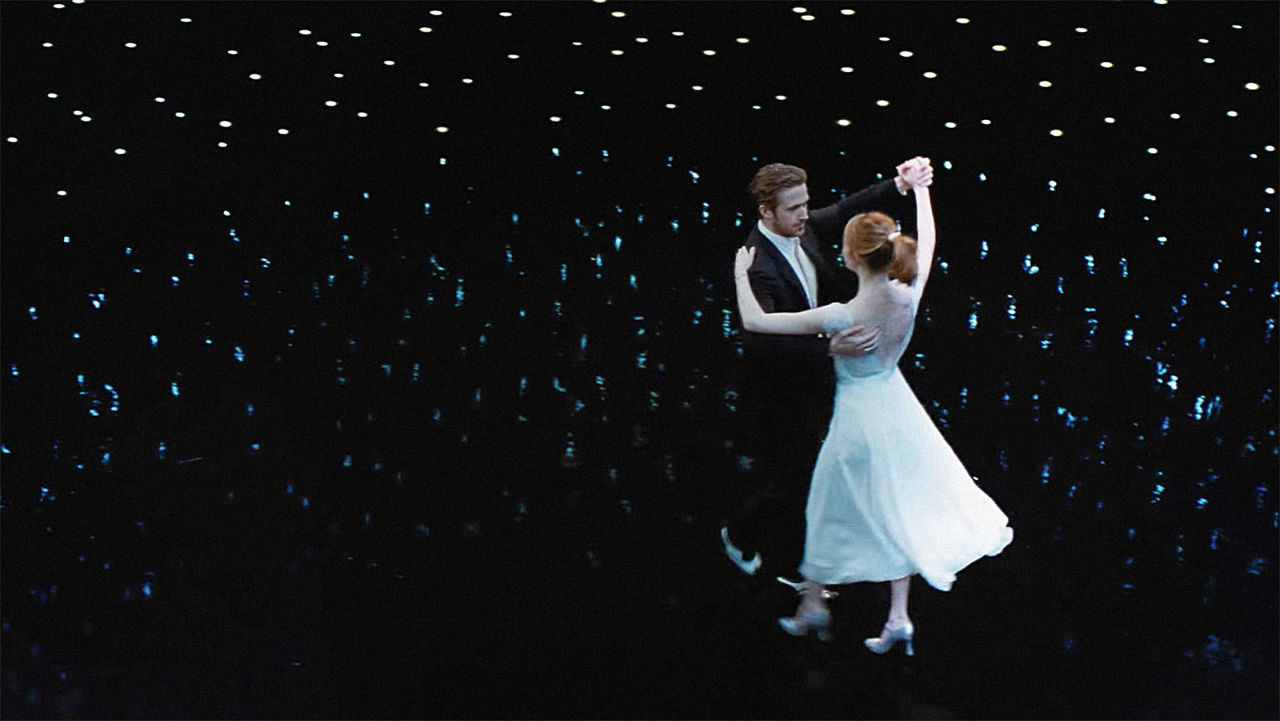
Just like La La
Land (2016), Whiplash
(2014) packs both a musical and cinematic punch. Though it shares more
than a few commonalities with La
La Land; for example, both were directed by Damien Chazelle and scored by
Justin Hurwitz; it's also fundamentally different.
 |
| Teller spends a lot of the film gritting his teeth and bleeding. {src} |
The film centers on Andrew (Miles Teller), a 19-year-old jazz
drummer intent on being “one of the greats.” This movie has a much darker feel than
La La Land as early as the first
place; rather than being on a sunny freeway, we meet Andrew, alone, furiously practicing
on a drum set in a basement music room.
He is interrupted by the entrance of the other main character,
Fletcher (J.K. Simmons), the maniacal director of the top jazz band at the music
school Andrew attends. With only two lines of dialogue, we already know what
Fletcher’s deal is: he’s a hardass, and possibly a jackass, and he’s going to
be very important in Andrew’s life.
The first time we hear ‘whiplash’ is when Andrew is sitting in
with Fletcher’s band for the first time after being invited to play with him.
The song has little to no deep significance within the context of the film
other than providing a theme. We then experience the true whiplash through
Fletcher’s mind games.
 |
| J.K. Simmons is probably a really nice guy in real life, but he's tyrannical in Whiplash. {src} |
So, when you think ‘games,’ you probably think ‘hey, I like games.
Games sound fun.’ But you would not want
to play Fletcher’s games. He systematically and almost militaristically breaks
the will of his students to stand up for themselves, and all in the name of
perfecting the craft; after encouraging Andrew in a ‘go with the flow’-style
conversation, after gaining some information about Andrew’s personal life
through what seemed like casual conversation, Fletcher does a total 180 and
absolutely reams him in front of the
whole band. It’s humiliating and devastating.
But Andrew doesn’t give up. He practices his hands bloody. He
listens to Buddy Rich all hours of the day. He coldly breaks off a potential
relationship to spend time being psychologically berated by Fletcher in the
pursuit of greatness. He even gets hit by
a truck and still, still, puts
meeting Fletcher’s deadlines and expectations ahead of personal well-being.
 |
| {src} |
 |
| {src} |
The dull, washed-out settings feed into the sometimes bleak tone of Whiplash.
And it’s in this loss of self that the speculation lies. There’s
no denying that Andrew is a better player at the end of the movie; there’s no
denying that Fletcher pushes determined musicians to be their best. But there’s
also no denying that Andrew becomes polarized from everyone in his life. He’s
not even friends with any of the other people in the band because he’s so
laser-focused on perfection.
His loss of self is most apparent in the final scene, during
nearly ten-minute long song in which he demonstrates dazzling technical skill
and rhythmic knowledge. To Andrew, this is the pinnacle, the beginning of his
career as one of the greats.
But as Andrew pulverizes the set, we see his father, who was there
to comfort him, there to encourage him, looking through a crack in the
auditorium door at his son as if he were a stranger, as if he were stolen.
Just like La La Land, we
leave this film feeling both pity and pride for the main character(s), and
Damien Chazelle collects another few Oscars.
The burning questions: Is it better to “die drunk, broke at 34
and have people at a dinner table talk about [you] than live to be rich and
sober at 90 and [have ]nobody remember who [you are]?” Are there really “no two
words in the English language more harmful than ‘good job’?”
Next time: a departure from scored movies to Garden State, which boasts a compiled soundtrack.