Wednesday, April 5, 2017

8 Miles of Really Good Rap

This week I decided to tackle yet another genre of music. I've talked about orchestral music, bluegrass, jazz, and some other genres, but never rap. This week I watched 8 Mile, starring Eminem as Jimmy 'B-Rabbit' Smith, a young rapper struggling for clarity and stability in Detroit.

(src)
I'm sure we all know who Eminem is, but if you don't, he is the best-selling artist for the entire decade from 2000-2010, a veritable 'rap god.' A big misconception about this movie is that it’s a biopic of Eminem’s beginnings as a rapper. That would be an easy assumption to make, seeing that Eminem is from Detroit and is a rapper. However, the movie is fictional and Eminem never claimed that the character B-Rabbit was supposed to be a representation of him.

The movie itself isn’t awe-inspiring, ground-breaking cinema in any sense. It’s your typical underdog story with a feel-good ending where the underdog finally overcomes stacked odds to reach his goal. B-Rabbit faces poverty, the shame of living with his mother, the heavy weight of her screwed-up life, job instability, and an incredible amount of discrimination as a white rapper trying to cut it in a genre that’s almost all black.

I’d say that B-Rabbit’s biggest problem throughout the movie is that he likes to fight. A lot. He spends a lot of the movie just confronting people with his fists and getting beat up rather than working on his rap game or coming up with new rhymes. I guess he doesn’t have to work that hard because he’s extremely talented, but still.

Time to talk about the music. Eminem actually wrote “Lose Yourself” for this film and it won him an Oscar. The music throughout the movie is consistent and cohesive. The movie takes place in 1995, when Biggie and 2pac and Wu-Tang were all really big, so a lot of the music throughout the film is just that stuff playing over the car radio as B-Rabbit and his squad drive around 8 mile. Only three songs throughout the film are played in the forefront, and all serve the movie most through their lyrics.

Rabbit raps his way to the top in
the final rap battle scene. (src)
The first is "Shook Ones Pt. II" by Mobb Deep, which plays at the very beginning when Rabbit is trying to get hyped up for the first rap battle. The lyrics showcase his insecurity. The other two songs are Eminem written, produced, and performed, and they fit in perfectly with the setting of the movie and the plot. “8 Mile” plays as he sits on the bus driving through 8 mile and composing, and the songs stunted lyricism conveys the decrepit state of the area. Of course, “Lose Yourself” plays throughout the movie when Rabbit gets hype about rapping, and the full extent of the song plays over the final credits.

Overall, the movie is really cohesive when it comes to blending music, setting, and plot. Eminem acts really well, conveying the lovable down-on-his-luck guy with aplomb. I would definitely recommend watching this movie on the basis of the music alone.


Wednesday, March 22, 2017

This WHOLE movie is a LIE!! You won't believe that it won EIGHT....

DISCLAIMER: I missed a passion blog post a few weeks ago, so you guys are getting two for the price of one this week on my passion blog! If you wanna read both, feel free as they are both great movies and I loved watching them. Disclaimer over.

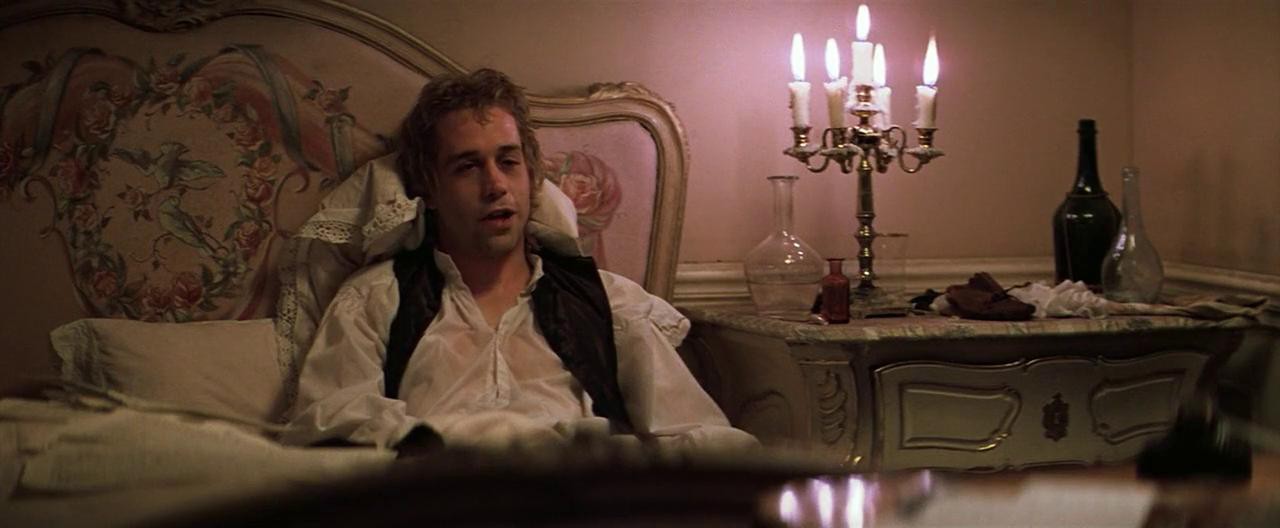
The second movie I decided to watch this week was Amadeus, an Academy Award magnet from 1984 which tells the story of Mozart from the perspective of his so-called rival, Antonio Salieri. 
Image result for amadeus
Mozart is played incredibly well by Tom Hulce, whose braying laugh is a perfect microcosm for the character himself. (src)
We hear the story of Mozart’s mid-to-late life through Salieri’s words as he speaks to a priest, decades after Mozart’s death. Salieri is a bitter old man at this point, bound to a wheelchair and bound to the depths of despair by the weight of the past. When he first met Mozart, he was a younger man, the court composer for the Austrian king, living well and living faithfully. Salieri’s only wish in life was to praise God through beautiful music, and before Mozart came along, he felt he was doing this adeptly.

But Mozart shakes his life up. This is a young man, immature, crass, and offensive, with more musical talent in his toenails than Salieri has in his entire body. Salieri sees that Mozart possesses tremendous talent, but, rather than supporting him and reveling in his miraculous creations, Salieri grows resentful and makes it his goal to destroy Mozart.

The majority of the movie is just Salieri covertly undermining Mozart time and time again while Mozart develops more and more trust for him. Salieri shames Mozart’s wife, accuses him of being a child molester to prevent him from getting work as an instructor, and shortens the lives of his operas, all without Mozart knowing. After Mozart’s overbearing and disapproving father dies and he writes one of his best operas, Don Giovanni, Salieri ensures that the masterpiece is only played a handful of times; thanks to Mozart’s reputation at this point as a drunkard and beggar, the masterpiece is only heard by a half-empty theater.

Mozart spends his final day on his deathbed with Salieri at the foot,
helping him to compose the requiem. (src)
However, the worst thing that Salieri does is commission a requiem from Mozart, with the intention of killing him and possessing the requiem as his own. By the time Mozart’s final days come around, when he’s desperately ill, him and Salieri are incredibly close, and Salieri is helping Mozart finish the requiem. But then Mozart dies, and the requiem goes unfinished.

This, of course, is the straw that broke the camel’s back for Salieri. He sees this as a damnation from God, that He would kill Mozart, his mouthpiece, just to scorn Salieri. At this point in the film, it is revealed that Salieri is (rightfully) in a madhouse, and the film ends on a rolling shot of Salieri passing the other inmates, professing himself the king of all mediocrity.

Obviously, the music is incredibly because Mozart’s work was and is incredible. All but four of the songs in the film are Mozart’s compositions. The music is perfectly attuned to the movie; each piece is carefully placed and attuned to the plotline at each point. The operas are impressive, and hearing Mozart’s music as if it were new is an incredibly enriching experience. I would recommend you listen to the soundtrack of the film below next time you study.


 Music by Wolfgang Amadeus Mozart (performed by The Academy of St. Martin-in-the-Fields) (full soundtrack)
  1. Le Nozze di Figaro (The Marriage of Figaro), K492, Act IV, Ah Tutti Contenti (1786)
  2. Don Giovanni, K527, A Cenar Teco, Da Qual Tremore Insolito... (1787)
  3. Axur, Re d'Ormus: Finale (1788)
  4. Die Entführung aus dem Serail (Abduction from the Seraglio), K384, Marten Aller Arten (1782)
  5. Die Zauberflöte (The Magic Flute), K620, Aria No. 14, Der Holle Rache Kocht (1791)
  6. Concerto for Piano in E Flat Major, K482, 3rd Movement, Allegro (1782-86)
  7. Concerto for Piano in D Minor, K466 (1782-86)
  8. Symphony No. 25 in G Minor, K183: 1st Movement (1773)
  9. Lacrimosa, Requiem Mass in D, K626
  10. Harpsichord Piece in F Major, K33B
  11. Adagio and Rondo for Glass Harmonica, Flute, Oboe, Viola and Cello, K617 (1791) 
  12. Confutatis, Requiem Mass in D, K 626 
  13. Serenade K361 Gran Partita for 13 Wind Instruments: Adagio 
  14. Le Nozze di Figaro (The Marriage of Figaro), K.492: Act 1 - Non Più Andrai (Overture)
  15. A Little Night Music Serenade in G for Strings 'Eine Kleine Nachtmusik', K.525, 1st Movement
  16. Die Entführung aus dem Serail (Abduction from the Seraglio), K384: Turkish Final
  17. Mass in C Minor, K. 427: Kyrie 
  18. Concerto for Flute and Harp, K. 299 2nd Movement 
  19. Allegro Moderato from Symphony No. 29 in A Major, K. 201
  20. Concerto No. 10 for Two Pianos and Orchestra in E Flat Minor (K. 365) 3rd Movement
  21. Allegro Maestoso from Sinfonia Concertante for Violin, Viola And Orchestra in E-flat Major, K364 
  22. Piano Concerto No. 15 in B-Flat, K450: III. Allegro
  23. Ich Möchte Wohl Der Kaiser Sein (K539) 
  24. Die Zauberflöte (The Magic Flute) Act 2 - Pa-Pa-Pa-Pa-Pa-Pa-Papagena! 
  25. Die Zauberflöte (The Magic Flute) Act 2 - Ein Mädchen Oder Weibchen 
  26. Six German Dances, K509: No. 1 in D Major 
  27. Don Giovanni, K527: Overture
  28. Rex Tremendae Majestatis, Requiem, K626 
  29. Le Nozze di Figaro (The Marriage of Figaro), K.492 /Act I: Duettino: Cinque...Dieci...Venti
  30. Die Entführung aus dem Serail (Abduction from the Seraglio), K384 Act I, Singt dem Grossen Bassa Lieder
  31. Le Nozze di Figaro (The Marriage of Figaro), K.492 /Act III: Finale: Amanti Costanti (Ecco la Marcia)
  32. Die Entführung aus dem Serail (Abduction from the Seraglio), K384 Act II: Duet: Vivat Bacchus! Bacchus Lebe! 
  33. Die Zauberflöte (The Magic Flute), K620/Act I: Overture
  34. Dies Irae, Requiem Mass in D, K 626 
  35. Introitus, Requiem Mass in D, K 626
  36. Don Giovanni, K527: Act II, Commendatore Scene
  37. Don Giovanni, K527: Act I, La Ci Darem La Mano 
If you felt like following along while you watched the movie, here's a record of the music used scene by scene.

THINGS TO THINK ABOUT:
Do you believe in God? Just kidding, don't answer that. 
Do you think religion can move beyond faith to insanity?
Do you like Mozart better than Beethoven (I don't). 

To Kill a Blog Post


DISCLAIMER: I missed a passion blog post a few weeks ago, so you guys are getting two for the price of one this week on my passion blog! If you wanna read both, feel free as they are both great movies and I loved watching them. Disclaimer over.

I'm not sure why it's come up so often recently, but I've spent a lot of time lately talking about good books, books that a lot of people read in high school. I was in a cafe in Pittsburgh over break reading a book and some guy just struck up a conversation with me about British literature, so that was pretty cool. My friend from high school and I talked about some books that we'd read in ninth grade, as well, one of them being To Kill a Mockingbird

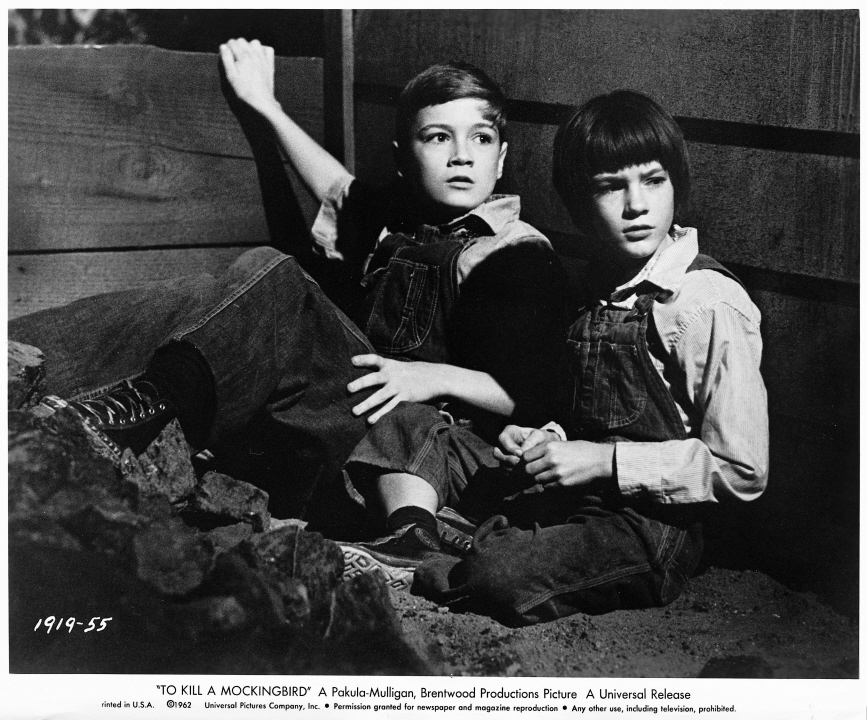
The young actor and actress playing Jem and
Scout do a phenomenal job. (src)
I'm pretty sure we all had to read this book at some point in high school, seeing as it's a great American classic. In case you didn't read it, I'm going to give you a brief rundown. The book is told from the perspective of Jean Louise Finch, a young girl living in the slow-moving town of Maycomb, Alabama during the Great Depression. The story seems to have two separate plot lines at first.

The first storyline concerns Jean Louise, better known as Scout, and her brother Jem, and their interactions with a strange, alienated man in their neighborhood. His name is Boo Radley, and his past is so shrouded in local lore that he's like the bogeyman to Jem and Scout. However, he begins to leave gifts for them in a tree near their house, and they begin to see that he's not all that scary.
Atticus Finch is a babe to be honest. It helps
that he's not a racist p.o.s. (src)

The second storyline concerns Atticus, Jem and Scout's father, and his defending of an innocent black man, Tom Robinson. Being that this is a small southern town in the Great Depression era, it doesn't really matter that Tom is innocent; if white people say he did something, then he did it, whether or not it happened. 

The storylines come together after Tom is found guilty of the crime and killed when he tries to escape. After this, the man who accused Tom has the nerve to attack Jem and Scout just to piss off Atticus, but they are saved by Boo Radley.

Anyone who’s read the novel knows that it has a very specific tone, sentimental and naïve, as it’s told through Scout’s eyes. I was worried that when I watched the movie, it would fail to capture the essence of the novel; I was worried that it would forego the main character, Scout, to focus on the trial, as the movie was released in the thick of the civil rights movement. But thankfully, the movie stayed true to the novel.


Also thankfully, the movie was greatly enhanced by its score. A playful melody weaves throughout the movie, the sound of childhood innocence; this melody is used skillfully throughout the movie when Boo Radley comes up, suggesting that he’s innocent and safe. It’s one of those classic scores for a classic movie, extremely well done.

THINGS TO THINK ABOUT:
Do you never really know a man until you stand in his shoes and walk around in them? Did you like this book when you read it? Did you read it in high school? What was your favorite book in high school?

Monday, March 13, 2017

Moonlight (this movie is too serious for a pun-based title)

I had to wait for the full moon to pass before I posted this (that's my best excuse for not getting this done the week before break). Regardless of how late I am posting this, I have a great movie to talk about and I hope someone (anyone) reads this post and has the opportunity to enjoy this movie and its wonderful music.
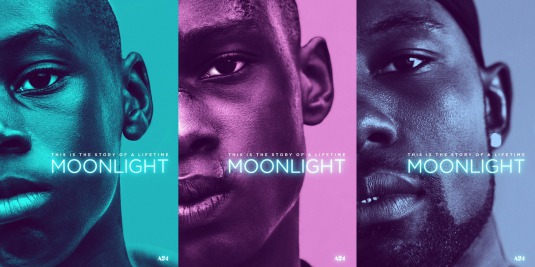
Moonlight is a movie in three acts (from left to right): Little, Chiron, and Black. (src)
This week, I watched the highly critically acclaimed Moonlight, the story of a young black man struggling with his identity as he roughs growing up in a bad part of Miami. The film follows him from his childhood through his adolescence, giving us a thorough picture of his formative years before dropping us into a much later time in his adulthood.

I won't spoil the movie too much for you, so I'll just give a brief plot summary: Chiron's biggest struggle during his childhood and adolescence is accepting that he is not heterosexual; because he is 'different,' he gets bullied constantly. He's coping with this bad situation at school and then having to come home to a mother who's not really herself, but a slave to drugs. He gets a little glimmer of hope in the second act when he connects emotionally (and sexually) with Kevin, a childhood friend who always seemed to understand him. But, not to give spoilers, things go dark fast. There is some resolution for Chiron in the final act; he reconnects with his mother and with Kevin, and the ending gives a little glimmer of hope, a shred of pure moonlight on a tumultuous ocean.

It's easy to see why this movie won best picture; it's incredibly cohesive, with the themes running smoothly through the dialogue, imagery, and soundtrack. (Hey, that's a good segue to talk about the soundtrack.)

The soundtrack for Moonlight is predominately original composition by Nicholas Britell, who has composed for other big dramas such as 12 Years A Slave and The Big Short. The composition itself isn't particularly outstanding outside of context; the majority of the tracks are less than a minute long and have almost no driving tempo, consisting of solo violin over atmospheric strings and piano. That being said, within the context of the film, the composition is incredibly powerful.

Chiron's story, though poignant, isn't particularly complicated; the soundtrack mirrors this. Each of the three acts of the movie, Little, Chiron, and Black, are accompanied by a theme. All three themes boast the same haunting, five-note melody on violin, but all three are also distinct.

The imagery in Moonlight is cohesive, and the ocean
is as much a character as Chiron or Kevin or Juan. (src)
"Little's Theme" has only piano and violin, with the piano playing chords only and the violin played to mimic a voice, possibly the voice of a mourner. The tune bleeds sadness. Chiron's theme introduces the five-note theme on piano and has the piano playing along with the violin, which is now clearer and more assertive. The third iteration of the theme, Black's theme, is the only time two violins play together, suggesting that Chiron is finally becoming one with his true identity. It is the fastest of the themes. The increasing tempos of the themes, I believe, mimic the increasing pace at which we, and Chiron, perceive the world as we grow up.


The rest of the original composition is as poignant and cohesive as the themes; there's even the smallest nod to Beethoven's "Moonlight" in the Interlude. Overall, the classical-style composition of the soundtrack in juxtaposition with the very modern and urban setting creates an overall sense of yearning and sympathy. I would talk more about it, but I'm already past my word count.

THINGS TO THINK ABOUT:
Do you think movies with extremely specific storylines are more relatable and poignant than those with a broader scope? If you've heard about the mixup at the Oscars, do you think it was a publicity stunt? Do you think Moonlight deserved best picture? If not, what do you think should have won?

Thursday, February 23, 2017

Bluegrass, Banjos, and Bullfrogs


Again switching it up this week, I'm going to talk about the Coen brother comedy O Brother, Where Art Thou?

The cult classic from 2000 is loosely based on Homer's The Odyssey. The movie follows Everett and his companions, Pete and Delmar, after they escape from prison in search of a 1.2-million-dollar treasure.
Clooney is Everett, Delmar is on the left, and
Pete is on the right. (src)

The movie loosely follows the plot of The Odyssey in that Everett escapes prison to journey home to his wife and win her back. Along the way, the boys meet a blind prophet, a pseudo-cyclops, and sirens, just like in Homer’s epic tale.

Overall, the movie is more of a comedy than anything else, with a litany of quotable quotes, such as:

“Those boys desecrated a burning cross!”

“The preacher says all my sins is warshed away, including that Piggly Wiggly I knocked over in Yazoo.”

“Shake a leg Junior! Thank God your mammy died givin' birth. If she'd have seen you, she'd have died o' shame.”

With this movie, I can’t really get too much into the plot without spoiling the whole thing or any of the jokes, and, if you’ve read The Odyssey, you kind of already know how the movie is going to go.

Keeping that in mind, I’ll just move on to the soundtrack, which is really, really good.

This is one of the most successful soundtracks I’ve ever heard in terms of establishing a tone from the get-go. The first scene is the prisoners breaking up rocks for the railroad; the prisoners are singing “Po Lazarus,” a traditional song. The song is sung a cappella in a nod to the chorus in Greek dramas.

The KKK scene is pretty scary. (src)
A lot of the music in the film is sung a cappella; a chorus alone sings “Down to the River to Pray” during a baptism scene, the sirens sing “Didn’t Leave Nobody but the Baby” without accompaniment when they seduce the trio, and the entire KKK scene is accented by the haunting chants of a men’s choir. The film even ends with an a cappella song, “Angel Band,” sung by Everett’s many children and the blind prophet.
This heavy use of vocal music without accompaniment creates an almost timeless effect and also nods to the simplicity of the lives of the characters.

All of the other music is quintessential bluegrass and folk. The first instrumental track we hear is Harry McClintock’s "Big Rock Candy Mountain.” This almost sickly sweet tune plays over the prisoners’ escape, creating a comedic feel right from the get-go.

But if there’s one track from this move that’s infamous, it’s the Soggy Bottom Boys’ "I Am a Man of Constant Sorrow." Not only is this a good song in and of itself, it’s also perfect for this movie. The song’s lyrics are undeniably dismal, and if you looked at them without hearing the song, you’d probably think it was a slow ballad. But the song is actually a super-upbeat bluegrass tune; this makes it almost comical, and it reflects the dark comedy of the film itself.

What do you think? Should I have stayed up until 4am to write this? Do you like Greek epic poems? Am I in class today? Do you like bluegrass?

Here's the whole soundtrack if you would like to listen: https://www.youtube.com/watch?v=HIXbh-VhaFg


Wednesday, February 15, 2017

You've Got to Be Akira-ding Me (I'm Running Out of Puns and I'm Sorry)

So first of all, I'm sorry guys, but I didn't watch any of your suggestions. I decided to go really off of my usual theme this week; so far, I've been writing about live-action American dramas from this millenium, but this week I decided to watch an animated Japanese sci-fi movie from 1988. So buckle up, because this is going to be a lot different from usual.

Akira doesn't have a single CGI frame, filled from beginning to end with
stunning, hand-drawn visuals. (src)
This week, I watched Akira, a cult favorite anime that set the standard for the genre in decades to come. Its stunning visuals and heavy thematic content make it a landmark film in any genre, influenced by such iconic films as 2001: A Space Odyssey and Blade Runner.

Akira opens on Tokyo in 1988 as it is being consumed by a nuclear blast, the nuclear blast that ultimately ended World War III. The story truly begins in 2019, in the dystopian Neo Tokyo, where biker gangs rule the streets and anarchy seems to be the norm.

We meet the two main characters, Tetsuo and Kaneda, in a hole-in-the-wall bar. The characters in this movie aren't particularly compelling; both guys grew up in a society that didn't really care to improve them. Both of them are tough guys, but Kaneda's always been cooler and tougher, and within the first ten minutes we find out that the driving force for the movie will be Tetsuo's fear of inadequacy.
Tetsuo (bottom) and Kaneda are at odds throughout Akira (src).

Through a complex and choppy series of scenes, we are introduced to the full cast of characters, which includes a mysterious rebel girl, some mutant children, and an overtly macho military man who is concerned at the stagnation of Neo Tokyo's resurrection. I'll spare you the details, because there are a lot of them, but as expected, the government is up to no good, and they're mutating orphans to try to awaken the innate power in human beings. It's sci-fi at its best.

Since I strongly encourage that you watch this movie, along with Blade Runner and 2001: A Space Odyssey, I won't give away the ending or the important plot points, but I will say that if you've ever watched the other two movies, the feeling at the end is pretty much the same in that you will sit with your mouth open for a half an hour, as confused as you are enraptured.

But! Since this is music and the movies, I'd better talk about the music.

I think the most interesting thing about this soundtrack is that it's often at odds with the content it underlies. Akira's soundtrack is worlds different from the other soundtracks I've talked about; it is originally scored, just like Whiplash and La La Land, but it's not jazz, and it's certainly not show tunes.

The majority of the tracks in the soundtrack are ethereal; they don't necessarily stick to any sort of consistent time signature and none of them are in a major key for any long period of time. In fact, and I'm about to get technical, most of them are in a hepta- and pentatonic scale typical of eastern Asian traditional music.

Almost all of the tracks rely heavily on rhythmic percussion and haunting choral chants, giving the entire film a primal feel indicative of the central themes of the narrative. The juxtaposition of syncopated rhythmic percussion and chanting with the lights and futuristic feel of Neo Tokyo creates a tense overtone throughout the movie.

Overall, the movie is a real trip, and I'd definitely recommend it.

The burning questions: Do you like sci-fi? Do you think it's effective as a mode of societal commentary, despite its atypical content? Do you like anime? What movie should I watch next (no promises)?

PS-I could say a lot more about this soundtrack, but I don't have the space here. Here's the soundtrack and, as a bonus, a Kanye West music video that is dedicated to Akira (it's his favorite movie).

Wednesday, February 8, 2017

Garden State: Indie AND Goodie

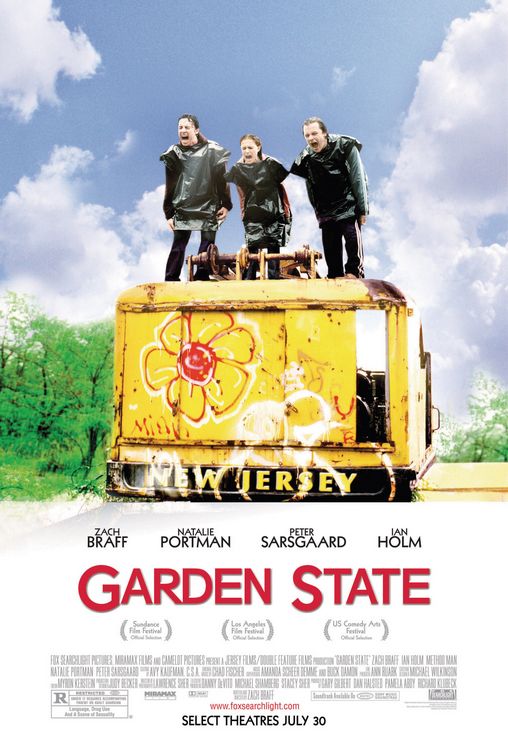
This week's movie is Garden State (2004), and no, it was not directed by Damien Chazelle like the previous two movies I've talked about. This one is actually written, directed, and starred in by Zach Braff (you know him best from Scrubs). 

We begin the film on a crashing plane, with Zach Braff as Andrew Largeman sitting calmly amongst the chaos, seemingly unbothered and possibly bored. We find out it’s a dream when he’s awoken by the ringing of a phone, which he ignores; it’s his dad, and he leaves a stinted message informing Andrew that his mother has died. Not surprisingly, no reaction from Andrew.

We then follow Andrew to a crappy-looking Thai restaurant in an LA suburb to the sounds of Coldplay’s “Don’t Panic,” the lyric ‘we live in a beautiful world’ darkly and comically juxtaposed against the dull concrete of LA and the even duller expression on Andrew’s face.

Garden State's subtle humor allows the film to be  dark without
getting bogged down in pessimism. (src)
We then cut to Andrew standing stoically at his mother’s funeral as an overtly Jewish aunt sings an interesting interpretation of Lionel Richie’s “Three Times a Lady,” which is undeniably hilarious. We learn from the same aunt that Andrew hasn’t been home in 9 years. When his dad says that they need to talk, he just agrees, but then leaves.

The movie up to this point has painted a grim picture of Andrew; one of the most upsetting moments is when he’s at a party, high on ecstasy, and he just sits there as “In the Waiting Line” plays monotonously. An objectively attractive woman even mounts him during a game of spin the bottle, and we have to painfully watch him try to figure out how to react. He’s completely checked out of passion or instinct.

And then a ray of sunshine appears in the form of Natalie Portman (as Sam).

src
src


Andrew meets her at a doctor’s office and though he continually tries to thwart her attempts to socialize with him, she’s persistent. She even has him listen to “New Slang” by The Shins. It’s during this moment, listening to the whimsical tambourine and seeing Sam through Andrew’s eyes, that Garden State has its first emotional moment. It’s also the first time Andrew smiles.

If you’re going to watch this movie, which I highly recommend, even more so than the previous two, I won’t spoil the rest for you like I usually do, but I will talk about the significance of the soundtrack within the context of the themes of Garden State.

First of all, this is a phenomenal soundtrack (listen to the whole thing here). Not only is every song perfectly placed and contextually sound, but the compilation as a whole reflects the theme of Garden State; it’s optimistic, yet it acknowledges that life is hard, and that life isn’t always good. Most of the songs talk about specific situations, but the way in which they are written makes them accessible and relatable to almost all listeners. And I think that’s where the power in Garden State and its soundtrack lies, in that kernel of truth, in that honest reflection of the human experience.

What do you think? Do you think it’s better to experience life in full, even if the lows are really low, than to be numb to it all? Do you like compiled soundtracks more than scored soundtracks? What movie do you think I should watch next?